Sunday, 16 January 2011

The story so far ...


I sometimes get a bit bogged down by words and inspirational thoughts, forgetting about the fact that I am actually a textile designer making tangible things.

I've started exploring how you can elevate the status of a stain on cloth by designing around it. I've been looking for a long time at the correlation between textiles and nature. Looking at how fungus, lichen and moss take over a surface in nature over time I have adopted the same concept in my textile designs. I have the idea of extending the stains into something of beauty. I have started by stitching around them with tiny, intricate lines.

In the coming weeks I want to also explore printing around these stains with fine lines, taking inspiration from my drawings from nature.

Thursday, 13 January 2011

Donate your stained, unwanted textiles!

I am sending out a plea for any plain (white or cream) textiles which have been stained in some way. I have a preference for tops, tablecloths and napkins. Ask anyone you think might be able to help. Its for my masters project so a very worthy cause. I really want to work back into these stained textiles and make them even more beautiful and meaningful than they ever could have been in their previous lives. Contact me at keelyb@hotmail.co.uk for more details. Thank you.

Sunday, 2 January 2011

Toast


I'm a huge fan of Nigel Slater so when I saw that there was a BBC television drama based on his childhood I felt very intrigued. It is called Toast on BBC, I missed it on the TV but caught it on BBC iPlayer.

Unfortunately his mother died when he was still a young boy and his relationship with his father was turbulent. There was a really beautiful scene where his dad goes out and leaves him and he feels alone and scared. He puts on a record and gets one of his late mother's dresses from the wardrobe pulls it close to him and smells it. He then starts dancing with the dress, we are transported back with him to a time where he is dancing with his mother in that very same dress. It was such a poignant moment in the film, and it really struck a chord with me. It just reminded me of how wonderfully evocative textiles can be. It may be just to provide physical comfort but often there is a more emotional attachment. The young Nigel not only used the dress to comfort him emotionally, he used it as a tool to re-live a precious moment with his mother. Later his father comes home and finds his son cuddled up with the dress. He removes it, holds it close to him and smells it in exactly the same way as Nigel has previously and breaks down. His tears saturating the dress. Previous to this, the father has been portrayed as very distant to his son, sometimes extremely cold and angry. In this scene it breaks down all of these barriers and humanizes him and probably shows him at his closest to his son, even though Nigel remains asleep throughout. I just thought it was wonderful to show how powerful an item of clothing can be.

I have focused on a very small part of the film but it really is worth a watch. Its beautifully filmed and deals with so many issues which relate to childhood and upbringing.

Tuesday, 28 December 2010

Repair


I'm looking at repair for my Masters project and as part of this I have been looking to the past, when society seemed more inclined to repair rather than buy new. I recently purchased
Make Do and Mend from the Imperial War Museum bookshop, which is a lovey re-issue of the 1943 version given out during the war by the Ministry of Information. I will admit that it was done out of necessity but they have lovely ideas on repairing and re-appropriating textiles.

I came across a r
eally interesting website called Selfpassage and stumbled across an article on repair which examines why, in a contemporary context, fixing garments is not encouraged. It also suggests why it is such a unique and beautiful thing:

'Old and carefully repaired clothes inherit another form of promise than fashion; that of continuous attention, of lasting affection, of careful handling and sincerity. It reveals modesty and virtue. The fabric may be broken, but the repair shows that the affection is unbroken. As the hole is repaired, new attention is added. Hope is fused into the material and form. Self-reliance and trust emanates from repair. A beautiful patching is a manifestation of careful love, a caress of time, a gentle kiss of compassion. Such thing fashion has, so far, never been able to commit to.'

I think this is probably the most beautifully intricate text I have ever read on the subject of repair. It captures all the things that I love about textiles and why I think we should value them much higher than we do currently.

Friday, 19 November 2010

The Polemic of 'Green Fashion'

Through my research into sustainable textile design I tend to sometimes come across statements which trouble me. The very concept of 'green' as a reference to environmental issues could indeed form another argument, but when placed next to fashion it makes it even more troublesome.

For even just to look at the dictionary definition of fashion we discover that it is a '
a popular or the latest style of clothing, hair, decoration, or behaviour' (oxforddictionaries.com). So in this sense fashion is inherently transitional. The very concept of fashion poses a problem for me. As long as we have changing trends we will also have the clothes that we already own which are démodé, which in most cases are destined for the rubbish bin. Even though fashion does work in cycles with the same things coming back into fashion, consider how many people would actually hold onto them in a society where clothes are so cheap and easy to replace.

For me the phrase 'green fashion' presents environmentally conscious designs as just a fad. A concept that is considered, bought into, then disregarded in the same way as a fashion trend.

I see sustainable and environmentally responsible designs as having to completely disregard the whole fashion system. As it stands it moves far to fast to ever be considered environmentally sound.

For me sustainability is about a slow and more meaningful approach to design. Its about buying quality objects which will last a long time, or buying second hand with a view to carry on a legacy.


Sunday, 24 October 2010

Finding beauty in strange places


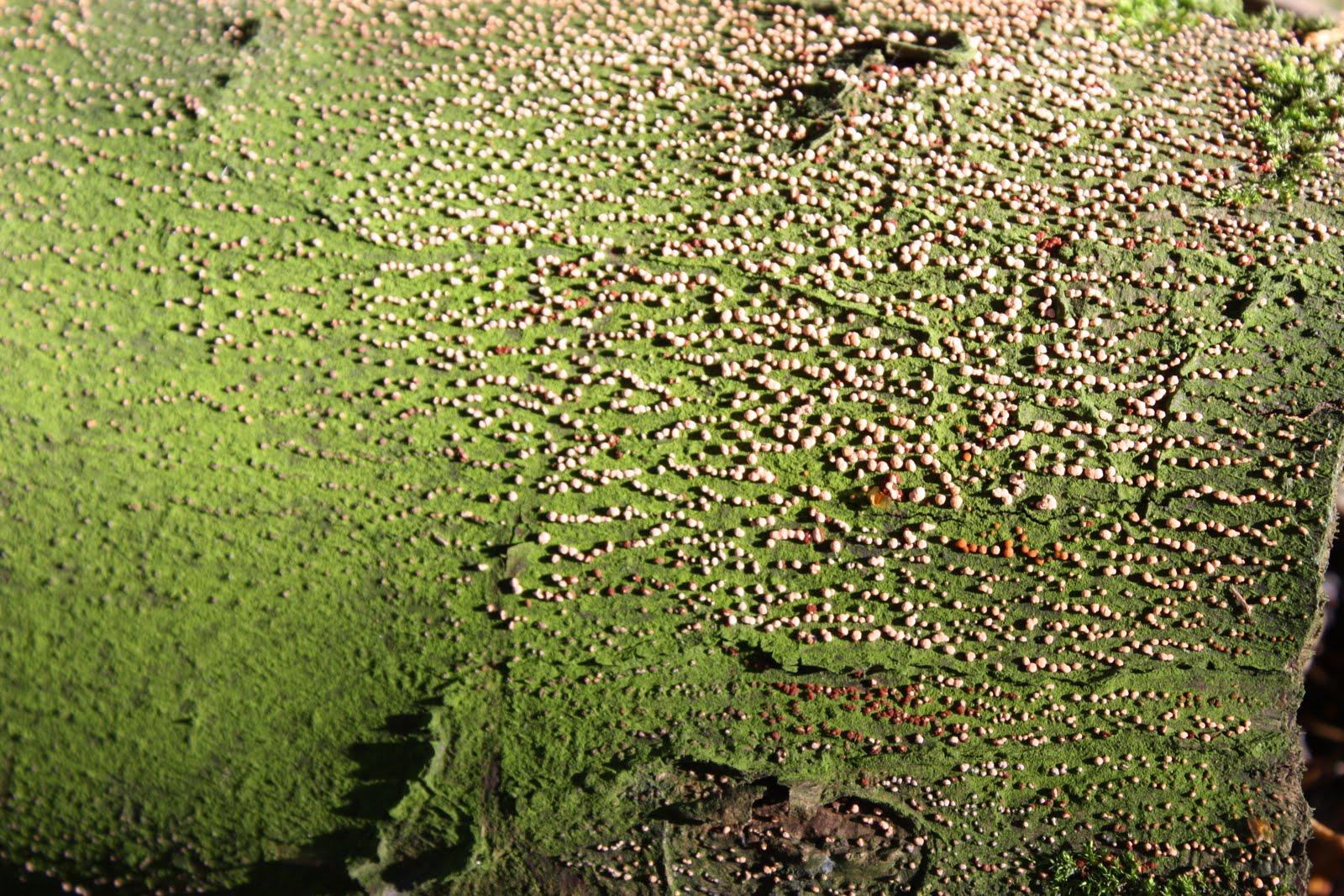
When thinking about how I could change people's views on stains and wear in textiles I thought about how I could refer to nature. I considered how in a woodland the surfaces gradually become consumed with mould and fungus and rot away. A lot of the time these elements of nature are seen as undesirable but they are beautiful. Today I went out with my camera into the woodland and documented some of these things. Diseased trees, fungus, lichen anything that has consumed a surface. One particular fungus (see above) almost looked like velvet. I want to try use this imagery in my textiles to try and get people to appreciate how a surface can be consumed with traces of life just like in nature and promote the idea of building up a surface over time to prevent it from being simply thrown away.

Wednesday, 29 September 2010

What do textiles mean to you?

It strikes me every so often why I am so drawn to textiles. Whenever I get a bit lost and don't know what I'm doing or where my next project lies I ponder over what textiles means to me. When I ask myself this question it reminds me just how powerful fabric is. From the moment we are born to the day we die we are surrounded by textiles. It is this that makes me wonder why it is that in recent years many people hold so little value in the textiles they buy. I like to think of something having a past life, I love the idea of a hand-me-down quilt or a vintage dress, all the people that have used it, worn it, worked on it. For me fabric naturally has a narrative. I remember as a child carrying around a blanket til it slowly deteriorated and eventually fell apart. I was heartbroken, it shared everything with me. It just seems to me that there is something so beautifully nostalgic about textiles, from the love and care that goes into their making to the stories that they encounter along their lives.